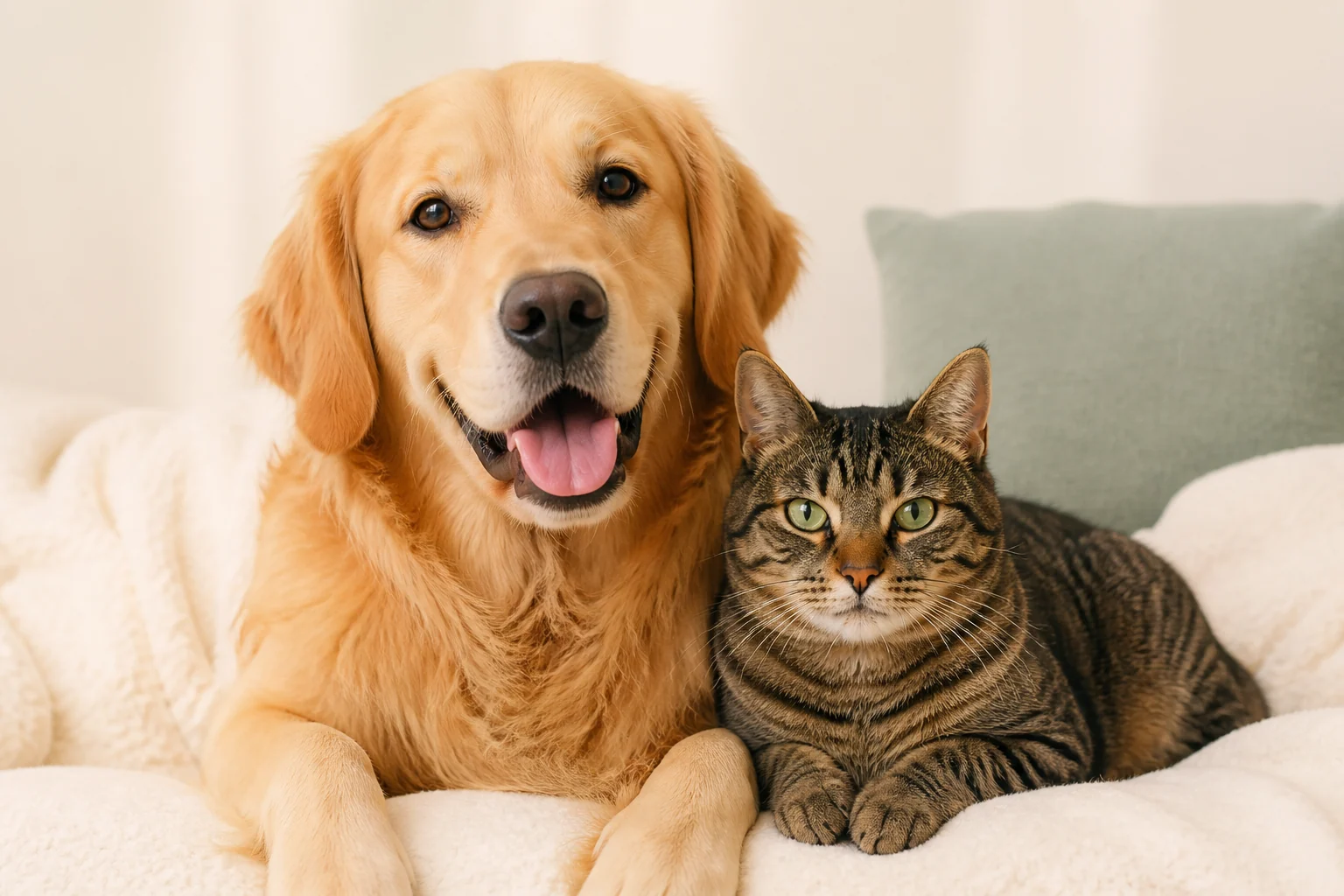
Choosing a Pet for a Quiet, Low-Activity Household
A quiet household should choose a pet by matching individual temperament, age, social needs, activity, care workload, and history—not by relying on species or size alone.
Choose for compatibility, not a label
Choosing the best pet for a quiet low activity household is not mainly a question of species, breed label, or body size. It is a matching decision. A relatively sedentary home still needs to provide an animal with appropriate attention, social contact, exercise or enrichment, training, grooming, veterinary care, housing, and financial resources.
The available evidence does not identify one universally best species for every quiet household. Instead, it supports assessing the individual animal and comparing its needs with the household’s actual routine. An animal that can settle easily may be more suitable for a quiet home, but that trait should be considered alongside social needs and the full care workload.
Define your household realistically
Start with the household rather than browsing for the smallest or quietest-looking animal. Write down a realistic weekday and weekend routine. Include work or school schedules, time away from home, mobility, visitors, other animals, finances, and tolerance for training or grooming. The goal is to identify what the household can reliably provide.
- How much time is available each day for attention, social interaction, play, walking, training, grooming, and routine care?
- How much exercise can the household consistently provide, including walking and play for a dog?
- What costs can the household manage for food, housing, grooming, routine veterinary care, and unexpected needs?
- Does the housing allow the animal’s needs to be met, including space, policies, noise considerations, and access to appropriate daily activity?
- How much uncertainty can the household manage while an animal adjusts to a new home?
Compare species cautiously
For dogs, activity compatibility deserves particular attention. Walking, play, social interaction, attention, and routine are relevant parts of the relationship between a dog and its owner. High-energy pets generally require more exercise, although energy level remains an individual characteristic rather than a conclusion that can be made from appearance alone.
A calm-looking animal may still have substantial social, housing, grooming, training, or veterinary needs. Species can guide the questions you ask, but they should not replace an assessment of the individual animal and the resources needed to care for it.
Assess the individual animal
Appearance can influence decisions, but research on adopters found that social behaviour toward the adopter and personality were also leading reasons for selection. Research involving potential dog adopters likewise found that behaviour was considered most often, followed by age, size, and lifestyle fit. These findings support giving observed behaviour and compatibility greater weight than appearance alone.
Pay attention to whether the animal can settle easily. For a relatively sedentary household, the ability to relax between activities may be a useful compatibility trait. It is not a promise about future behaviour, and one observation should not be treated as a complete assessment. Ask what staff or volunteers have seen over time and in different situations.
- Observed energy level: Does the animal remain active, or can it settle after stimulation?
- Behaviour toward people: Does it approach, avoid, or respond comfortably to the adopter and household members?
- Interactions with other animals: What has been observed, and in what setting?
- Personality: Does the animal’s style of engagement fit the household’s expectations?
- History: What is known about previous housing, routines, behaviour, and foster experiences?
- Daily care: What exercise, attention, training, grooming, housing, and veterinary responsibilities are expected?
Use age to improve predictability
Age can make matching easier because adult pets generally provide more predictable size, coat, athletic ability, and behavioural tendencies than puppies or kittens. This information can help a household judge whether the animal fits its space, routine, and activity capacity.
Predictability is not the same as a guarantee of lower care. Every adult or senior animal may have its own exercise, social, grooming, training, veterinary, and adjustment needs. Young pets generally require more training, but individual variation matters. Consider the animal’s known history and current behaviour rather than assuming that age alone determines workload.
Do not mistake small size for low care
Small size is only one consideration. It does not determine total care needs, and choosing a small animal should not be used as a shortcut to choosing a low-maintenance pet. Evaluate the whole package: time, money, space, social contact, activity, grooming, training, veterinary care, and the animal’s individual history.
- Daily exercise or play and the time required to provide it
- Social contact and attention, including how the animal responds to being alone
- Training needs and the household’s willingness and capacity to participate
- Grooming requirements and tolerance for regular handling
- Veterinary workload and expected ongoing costs
- Housing, equipment, routine, and any restrictions
- The animal’s known history and adjustment needs
Use adoption information thoughtfully
Adoption resources can improve the quality of the decision when used together. Speak with shelter staff or volunteers, interact directly with the animal, complete an honest self-assessment, and ask for foster-history information when available. A research-based matching framework described by the ASPCA combines animal assessments, adopter surveys, and adoption-counsellor conversations. Its page reports positive observations from participating agencies, but the supplied material does not allow independent assessment of all reported outcomes, so the framework should be treated as a support—not a guarantee.
A brief shelter visit may not fully predict behaviour after adoption. When possible, ask for multiple controlled interactions, compare information from more than one observer, and find out what the organization’s return policy is before committing.
A practical pre-adoption checklist
The best match is the individual animal whose needs the household can meet consistently—not necessarily the youngest, smallest, quietest-looking, or most attractive option. Leave room for adjustment after adoption and acknowledge that behaviour observed in a shelter is not a complete forecast.
- Describe your normal weekday and weekend routine, including time away from home.
- Ask what walking, play, social interaction, attention, and settling behaviour have been observed.
- Ask about training, grooming, housing, veterinary care, and likely ongoing expenses.
- Ask what is known about the animal’s previous home, behaviour, and routines.
- Ask whether foster information or multiple observations are available.
- Confirm adoption support and the return policy before adoption.
Make the decision about the match
There is no universal answer to the question, “What is the best pet for a quiet low activity household?” A suitable choice depends on the fit between the animal’s observed temperament, energy level, social needs, age, history, and care workload and the household’s time, finances, housing, and routine. Compare species cautiously, look beyond size and appearance, and use staff guidance, direct interaction, foster information, and return-policy details to manage uncertainty. Compatibility is the goal—not a label.
Keep exploring Karevu
Frequently asked questions
What is the best pet for a quiet low activity household?+
There is no single universally best species for every quiet, low-activity household. The better choice is an individual animal whose observed energy level, ability to settle, social needs, exercise requirements, care workload, and history fit the household’s routine and resources.
Are cats always a better choice than dogs for a low-activity household?+
No. Species labels alone cannot determine compatibility. A dog’s needs for walking, play, social interaction, and routine should be assessed carefully, while an individual cat or another companion animal also has its own care and enrichment requirements.
Does choosing a small pet mean choosing a low-maintenance pet?+
No. Small body size does not determine total care needs. Housing, attention, social interaction, exercise or enrichment, grooming, training, veterinary care, and individual history may all affect the workload.
Why might an adult pet be easier to match to a quiet household?+
Adult pets generally offer more predictable size, coat, athletic ability, and behavioural tendencies than puppies or kittens. This can help a household assess compatibility, but it does not mean every adult or senior pet requires less total care.
What temperament traits should a quiet household look for?+
Look for a suitable energy level, the ability to settle easily, comfortable social behaviour toward household members, and compatible interactions with other animals when relevant. Ask how the animal behaves across more than one interaction if possible.
How can adopters assess whether a dog’s activity level matches their routine?+
Compare the dog’s apparent activity preferences with the household’s realistic capacity for walking, play, social interaction, attention, and routine. Ask shelter staff or volunteers for behaviour information and consider foster history when available. Do not rely on size or appearance alone.
What should I ask shelter staff or volunteers before adopting?+
Ask about observed energy level, ability to settle, social behaviour, interactions with people and other animals, daily routine, training, grooming, relevant history, and foster behaviour if available. Also ask about the organization’s return policy and available support.
Can a brief shelter visit reliably show how a pet will behave at home?+
No. A brief shelter observation may not fully predict behaviour after adoption. Direct interaction is useful, but multiple controlled interactions, staff or volunteer information, foster history, and a clear return policy can provide additional context.
Sources and references
The links below are the references associated with this guide. The access date shows when Karevu recorded the source in its editorial process.
- Behavior Management: Pet Selection Guidelines — VCA Animal Hospitals / LifeLearn Animal HealthVeterinary professional sourceResearch URL cross-checkedAccessed: Aug 30, 2026
Pet selection should account for available time, finances, exercise, social interaction, attention, training, grooming, veterinary care, housing, and the household’s routine. The source specifically notes that high-energy pets require more exercise, young pets require more training, size does not determine total care needs, and an individual pet that can settle easily may suit a relatively sedentary household. It also states that adult pets provide more predictable size, coat, athletic ability, and behavioral tendencies than puppies or kittens.
- Why Did You Choose This Pet?: Adopters and Pet Selection Preferences in Five Animal Shelters in the United States — MDPI AG, AnimalsAcademic / peer-reviewedResearch URL cross-checkedAccessed: Aug 30, 2026
A survey of 1,491 adopters found that appearance, social behavior toward the adopter, and personality were leading reasons for selecting pets across species and age groups. Respondents considered information from shelter staff or volunteers particularly important, and the findings support using direct interaction and behavior information to make better lifestyle matches rather than relying on appearance alone.
- Decision Factors Considered By Potential Dog Adopters During Shelter Visitation — Taylor & Francis, Journal of Applied Animal Welfare ScienceAcademic / peer-reviewedResearch URL cross-checkedAccessed: Aug 30, 2026
In surveys of 517 potential dog adopters visiting eight Mid-Atlantic adoption sites, dog behavior was the most frequently considered factor, followed by age, size, and lifestyle fit. This supports framing a quiet-household decision around observed temperament and compatibility, while treating size as only one factor among several.
- Dog-Owner Compatibility Index of Activity Preferences — CABI, Human-Animal Interaction BulletinAcademic / peer-reviewedResearch URL cross-checkedAccessed: Aug 30, 2026
The study developed and evaluated an activity-preference compatibility measure for dogs and owners using samples from Mexico and the United States. It presents shared activity preferences, including walking, play, social interaction, and routine, as a relevant dimension of dog-owner compatibility and discusses behavioral mismatch as a possible contributor to relationship problems and relinquishment. The study also notes limitations in existing matching tools and does not establish that its index predicts adoption success.
- Meet Your Match Pet Adoption Program — ASPCApro, American Society for the Prevention of Cruelty to AnimalsVeterinary professional sourceResearch URL cross-checkedAccessed: Aug 30, 2026
The ASPCA describes Meet Your Match as a research-based adoption framework using animal assessments, adopter surveys, and adoption-counselor conversations to support matching. The page reports that counselor-provided information helped adopters modify expectations and that participating agencies observed increased adoptions and reduced returns, while the page does not provide enough methodological detail to independently assess all reported program outcomes.